
悠长假期
从雪道到山野 吉林“轻极限”运动撬动暑期文旅经济_我的网站

A |
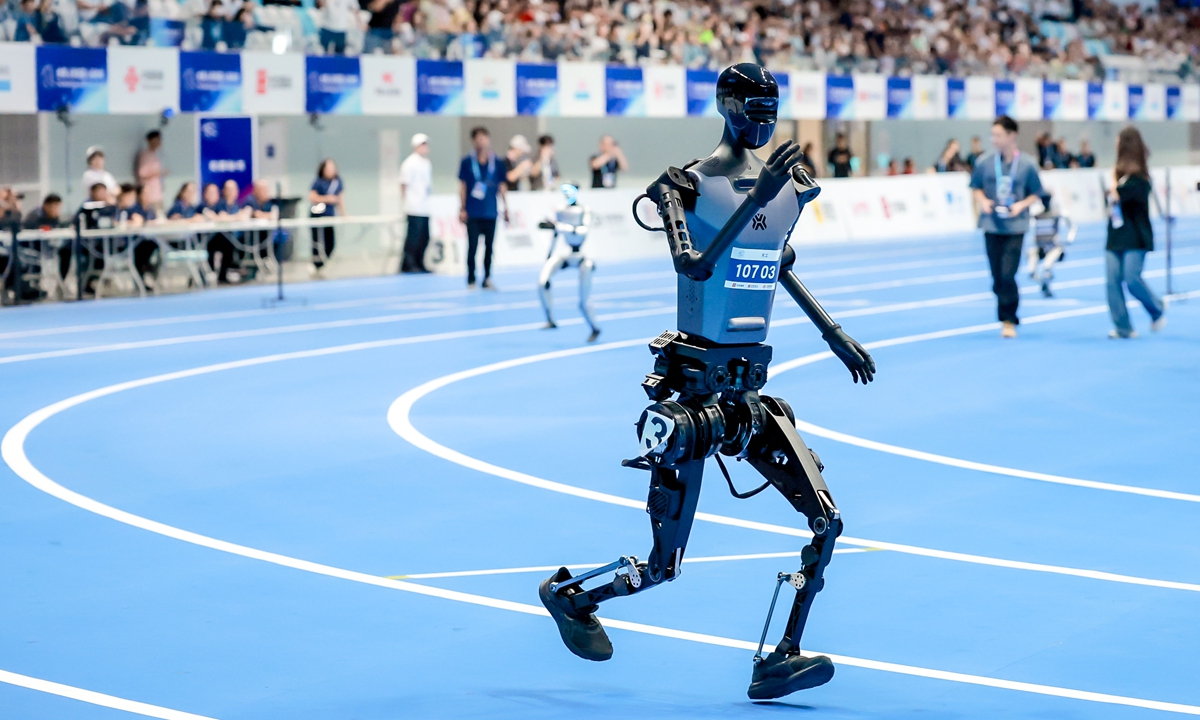
The Games, to last until August 26, are drawing 666 teams and 2,056 robots from 16 countries and regions across six continents, underscoring the event's growing scale and influence in the global humanoid robotics sector, according to Chinese industry experts on Sunday.
A key feature this year is the newly established "Robot Home," an on-site support center designed to function much like an athletes' village for human competitors.
The facility can house more than 1,500 robots and charge at least 1,200 batteries, while enabling digital check-in and retrieval for a single robot in just 30 seconds, according to reports by China Central Television (CCTV) Finance on Sunday.
This marks a clear shift from a simple technology showcase to a more mature, competition-grade event, one analyst said. With robots now being managed through systems similar to industrial asset management - covering storage, dispatch, maintenance and safety monitoring - the Games are increasingly seen as a practical testbed for the commercialization of humanoid robotics.
According to CCTV Finance, the Robot Home will act as the football training and competition base for robots.
For team events like football, the organizing committee often provides the robot bodies, and just a few steps away is the energy recharging station.
At the station, the batteries offered by the organizing committee are charged in advance in the power cabinets, with each compartment equipped with a corresponding power strip.
The Games will also feature a "Robot Street," with activities such as intelligent retail, virtual reality viewing, and robot-operated cafes, providing a richer technology experience for both participating guests and spectators.
It will also provide an interference-resistant and highly reliable competition environment, achieving 5G+Wi-Fi converged communications.
According to the CCTV report, the event organizer has also developed the world's only competition command system specifically designed for robot events, along with an embodied intelligent robot management platform that enables the management of robots across different brands and models.
An analyst said the focus of this year's Games is shifting from whether robots can finish a course to whether they can actually perform tasks.
"Last year it was about whether they could run to the finish line. This year it's about whether they can get the job done," Wang Peng, an associate research fellow at the Beijing Academy of Social Sciences, told the Global Times.
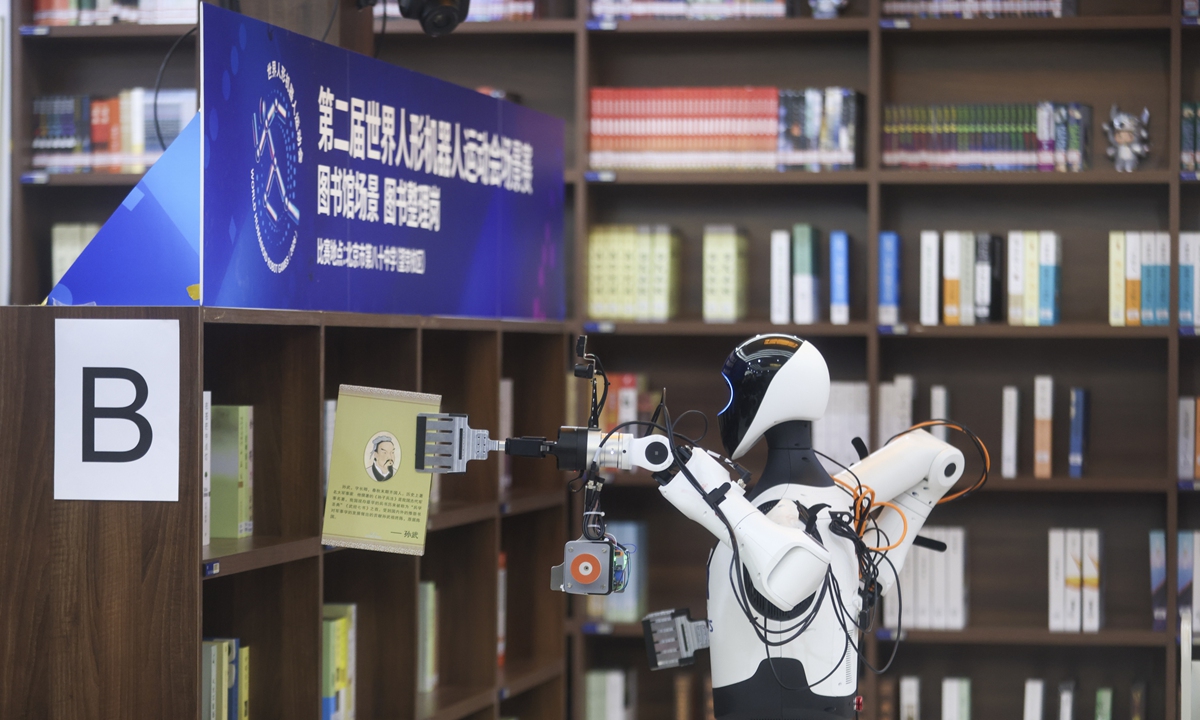
Centered on real-world applications, the scenario competition, one of this year's highlights, is designed around practical needs, with long-process tasks built on complete business logic to test humanoid robots' coordination and operational capabilities in real, complex environments, according to the organizers.
At a real firehouse in Beijing on Sunday, humanoid robots took part in a simulated firefighting mission, testing their ability to detect hazards, operate equipment and respond to emergency scenarios.
Meanwhile, several participating teams were seen in the final sprint of preparation, gearing up for competitions across diverse scenarios such as home services, industrial manufacturing, and emergency rescue.
At the industrial ecosystem training and evaluation base inside the National Speed Skating Oval, robots entered intensive preparation for office-scenario events.
In one challenge, robots must autonomously complete tasks such as loading printers, arranging meeting supplies and operating a paper shredder within 20 minutes. Any mistake or delay can affect the final score, staff at the venue explained.
Compared with the inaugural edition, the number of participating teams has increased by 138 percent, underscoring the rapid expansion of humanoid robotics as the technology moves from showcase demonstrations toward practical application.
This year's Games will run for five days and feature 51 events in total, including 30 competitive events such as ball games and confrontation contests, as well as 21 scenario-based events covering industrial assembly, home services and emergency rescue.
The planned 51 events span competitive, scenario-based and dexterous hand categories, which will reflect gains in motion control, perception-based decision-making and fine control, Chen Jing, a vice president of the Technology and Strategy Research Institute, told the Global Times on Sunday.
The competition has been significantly expanded in both scale and realism.
Scenario-based contests will take place in environments modeled on factories, hotels, homes and logistics facilities, with tasks including assembly, housekeeping, rescue operations and book sorting designed to test robots' ability to perform useful work in demanding conditions, according to reports from the Xinhua News Agency.
For the first time, the Games will establish a dedicated dexterous hand competition, which includes eight high-precision events, all drawn from real industrial production and everyday life scenarios.
A representative from AGILINK, the officially certified dexterous-hand equipment provider, told the Global Times on Sunday that winning the dexterous hand competition certifies a product's capability and means it has cleared the "demonstration-grade" threshold for real-world use.
The event is better understood as an incubator of industry consensus, Chen said, adding that competition first identifies the testing methods that Chinese and foreign firms both accept, which can then evolve toward international standards.
With robots now being managed through systems resembling industrial asset management, including storage, dispatch, maintenance and safety monitoring, the Games are increasingly seen not merely as a technology exhibition, but as a practical testing platform for the commercialization of humanoid robotics, according to Wang.
As the competition opens, the key question may be less about who wins medals and more about which robots, and which companies behind them, will be able to turn those medals into marketable orders, Wang noted.
。 笛声骤响,百余名越野跑选手冲出起跑线,沿着吉林中旅松花湖度假区的高落差赛道向山顶疾行。 7日傍晚,2026松花湖东北100落日冲坡赛鸣枪开跑,参赛者迎着落日余晖奔赴终点,并在山顶与落日合影留念。 依托地处世界冰雪黄金纬度带的粉雪资源,加之夏季平均22摄氏度的凉爽气候,吉林省内各大雪场正加速从“单季冰雪”向“四季全域”转型。

B | 凭借地形起伏与垂直落差等先天条件,“轻极限”运动成为撬动当地文旅消费的新支点。 此番落日下的奔跑,是吉林各大雪场丰富暑期运营业态的缩影。赛事组织者介绍,近年来国内户外运动产业持续升温,越野跑赛事数量和参赛人数实现快速增长。消费趋势亦随之变化:消费者不再满足于基础消费,更愿为户外体验、健康生活、自我挑战付费,全新夏日消费场景加速成型。在2026松花湖东北100落日冲坡赛中,选手们从起点出发。 石洪宇 摄 目前,吉林市两大核心冰雪度假区的暑期运营业态日趋丰富。据吉林市冰雪经济高质量发展试验区介绍,北大湖滑雪度假区已推出30余项户外休闲项目,配套山地自行车道与徒步路线,并依托东北首条国家级登山健身步道,常态化举办山地健康跑。

C | 全长2.3公里、落差近300米的山地滑车,以及UTV丛林穿越同步开放。

D | 该度假区已构建起“春赏花、夏避暑、秋登山、冬戏雪”的全季运营体系。 中旅松花湖度假区则重点深耕赛事经济。总经理赵兰菊介绍,6月末举办的青山之巅跑山赛吸引全国千余名选手,设置42公里、22公里、10公里等组别,串联高山花海与越野陡坡。9月,松花湖东北100跑山赛将如期开赛,设置从100公里到10公里共七大组别。该赛事2023年创办时仅有千余人参与,今年预计突破1万人,其中外省选手占比近八成。 每逢周末,度假区还推出山谷音乐会、星空露营影院、篝火派对及夜间观光缆车体验等休闲项目,与风筝会等群众体育活动形成互补。 与此同时,长白山万达国际度假区打造自有夏日IP“22℃自在局”,主打轻户外休闲理念,提供林间骑行、桨板体验和自然科普课堂。长春莲花山度假区依托山水资源,重点发展骑行、徒步、露营三大业态,进一步丰富吉林省夏日“轻极限”运动版图。 吉林市官方介绍,今年暑期“轻极限”运动对消费的拉动作用逐步显现。此类活动可形成“一人参赛、全家同行,一日参赛、多日留宿”的叠加消费模式,让以粉雪闻名的冬季滑雪场,在非雪季同样保持客流活力,真正实现全季运营。
Current article:http://gj3.fanfutaopoulaxiong.pics/news/20260826_62824.html
Published on:04:30:24
 警惕!超过900万安卓用户安装了“大量广告”应用程序
 舌尖上的NTU 解锁校园最新美食餐厅
 财经聚焦丨总量合理、结构向优——透视7月金融数据
 重返都灵,博格巴披上10号战袍
 首次联动 这场活动让青年读懂西湖的浪漫底色
 内塔尼亚胡宣称美伊“不可能”达成外交协议
- ·【仓单】8月26日郑商所锰硅期货仓单较上一日下降577张
- ·武汉降温时间确定!
- ·PS大停机开始!玩家相约一周不开机抗议索尼
- ·央视曝光:涉黑团伙蹲点驾校 偷装GPS定位追踪 专挑无证驾驶人员碰瓷
- ·【观点】南华期货:黄大豆一号多空博弈焦灼,关注减产预期
- ·雷军手持神秘新机,这是小米阔折叠手机?
- ·“旅客买票占座放零食”应如何处理?专家解读
- ·铭凡M2 Pro迷你机上市:酷睿Ultra X7 358H、板载32GB大内存
- ·【品种策略】锌:08月26日多家期货公司晨报观点汇总
- ·Upcoming Hollywood Movies Releasing in December 2025: Avatar: Fire and Ash and More
- ·借5千被收1千多利息,全民钱包未明所有收费明细
- ·奥克兰人要疯!公共交通还要涨价或削减服务,地税也可能更高!
- ·在华为“感恩节反馈季”的背后,温度保持不变。
- ·Idaho officials briefly order evacuation of small town after gas line explodes
- ·斯诺克英国公开赛资格赛:张安达淘汰“台球皇帝” 5名中国选手首日全员晋级
- ·ATP最新排名:兹维列夫重回世界第二、鲁内重返前十
- ·中科电气:拟定增募资不超过24亿元
- ·Robo.ai:上半年净利润4670万美元,同比扭亏为盈
- ·英特尔临时首席执行官:过去几年仅限于个人电脑市场,现在发现了更多的机会
- ·"My Father's Legacy Is Me Being The Best Version Of Myself": Babil Khan On Irrfan Khan – Exclusive
- ·Former Dollar General CEO Vasos is back and Wall Street cheers. Shares up sharply
- ·成都疫情形势整体向好
- ·热身赛:末节23-11!中国女篮逆转双杀尼日利亚 张子宇23+13
- ·金价暴涨,老庙黄金“玩不起”?订单拦截、拒发货引众怒
- ·每秒78万亿次AI运算!英伟达推出Jetson Orin Nano 2机器人计算机
- ·9月13日收评:上证指数微涨0.05% 两市成交7713亿_个股_涨停
- ·牧原股份:未来一头猪在养殖端及屠宰端的价值增益空间能超100元
- ·奋进强国路 阔步新征程丨让绿色发展成为城市振兴最美底色
- ·别再按日期写博客了:知识中心模式让网站流量翻倍的思路
- ·宇树科技连跌5日 股价跌破600元 市值较历史高点蒸发2000亿元
- ·不愧是费多罗夫,两个问题如同“尖刀”,泽连斯基的回应苍白无力!,兵器观察员,原创 不愧是费多罗夫,两个问题如同“尖刀”,泽连斯基的回应苍白无力!
- ·参观哈工大,普京现场透露摆脱懒惰妙招